
Six-Seven: The Deep-Fried Return of Dada

Why the Internet’s Youngest Voices Are Speaking in Neo-Dada
I. The Joke That Refuses to Explain Itself
There is a particular kind of joke circulating right now that feels almost aggressive in its refusal to mean anything.
A student says: “67.” The room collapses into laughter. No one explains.
To an outside observer, this reads as cultural decay—a punchline without a joke. But that assumption relies on an outdated premise: that humor must resolve into meaning.
What if the joke is not failing to communicate? What if it is performing a refusal?
“67” operates less like language and more like a signal—an entry point into a shared sensibility. It is not meant to be decoded. It is meant to be recognized. And in that recognition, it produces something closer to belonging than understanding.
II. A Brief Return to Dada

In 1916, artists gathered at Cabaret Voltaire in Zurich and began producing what they called Dada—a movement defined not by style, but by rejection. They rejected logic, aesthetic hierarchy, coherent narrative, and the assumption that art should “make sense.”

This was not playfulness for its own sake. It was a response to a world that had begun rationalizing with mass destruction through systems of order, progress, and reason. It was a response to industrialization and the start of World War I. Sense is often made about the movement by a simple framework:
If the world was irrational, then rational art would become dishonest.
So they made nonsense:
sound poems without semantic meaning
collages from fragmented media
performances that resisted interpretation
Dada was not meaningless. It was anti-meaning as critique.
III. Meme Culture as Readymade Debris
Contemporary meme culture functions in a strikingly similar register.

Consider the formal qualities of what is often dismissed as brain rot:
degraded image quality
recursive references to other memes
captions that undermine their own setup
deliberate misuse of format
visual and linguistic fragmentation

These are not accidents. They are aesthetic choices—ones that mirror a media environment where everything is overproduced, flattened into the same feed, and instantly recyclable through retweets, reposts, remixes, artificial filters, and shares.
If Marcel Duchamp could take a urinal and reposition it as art, today’s meme-maker takes digital waste—compression artifacts, screenshots, AI hallucinations—and repositions it as cultural expression.
Not despite its degradation, but because of it.
IV. The Collapse of Meaning (and Why It Feels Honest)
The instinct to call this humor “nihilistic” is not entirely wrong—but it is incomplete.
What we are seeing is not just a rejection of meaning. It is a rejection of stable meaning.
Research on Gen Z humor suggests a preference for:
Absurdity without resolution
Layered irony
Inside jokes that resist external interpretation
This aligns with a broader postmodern condition—one where:
Truth is contested
Sincerity is risky
Language is constantly mediated
Where postmodernism lingered in irony, this generation pushes further into absurdism as default.
The joke does not say:
“Nothing matters.”
It says:
“Meaning is unstable, so let’s play inside that instability.”
(And yes, that has the potential to be entirely dangerous. I will have to draft "Play As A Revolutionary Tool for Learning, Coping, and Connection" as a separate blog post).
V. Oscillation: Irony, Sincerity, and Survival
And yet—this culture is not purely detached. It oscillates.
A meme may present as absurd, but beneath it lives:
anxiety
loneliness
ecological dread
economic precarity
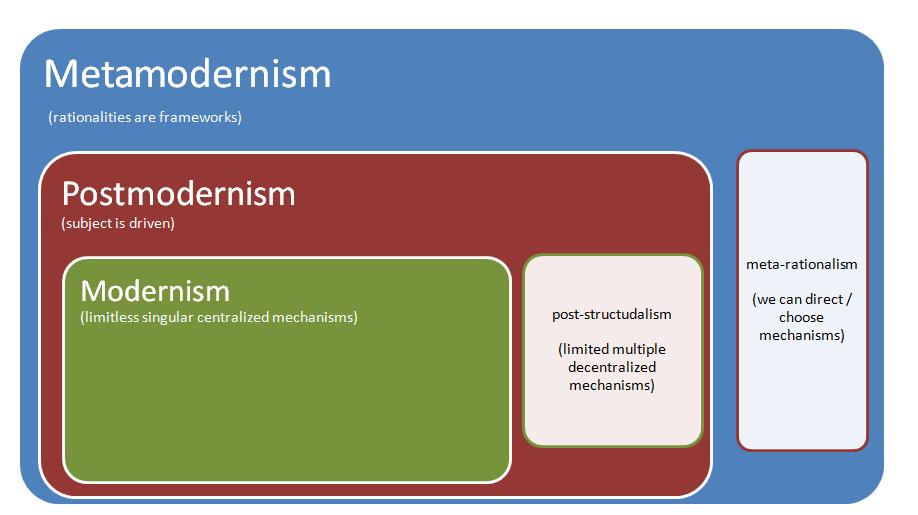
This is where contemporary theory often invokes metamodernism—a swinging between irony and sincerity.
The absurd becomes a container— a way to say something real without saying it directly, or a way to feel without being exposed. In this sense, nonsense is not avoidance. It is a form of emotional technology in a society in which our interpersonal worlds are increasingly exposed.
VI. Neo-Dada Under Algorithmic Conditions
“67” is not funny because it is random.
It is funny for the same reason Dada grabs your attention. It:
refuses explanation
resists commodification (at least temporarily)
creates an in-group through shared confusion
It is a micro-act of rebellion against the expectation that everything must be legible, searchable, and optimized for clarity. It is language behaving badly on purpose, which is to say—it is behaving like Dada. Many, including some of my colleagues in public education, loathe it. As Jared Henderson says in the following video essay:
"If you're angry, you're paying attention."
This brings us to one, crucial difference between 1916 and 2026. Dada existed at the margins. This exists inside the machine. Today’s absurdism is tracked, monetized, and algorithmically amplified.
Even nonsense generates engagement, creating a strange paradox:
The anti-meaning gesture is now part of the attention economy.
And yet, within that system, it still retains a flicker of resistance. Because what cannot be easily explained cannot be easily controlled. Admittedly, this is why I giggle at my colleagues' attempts to ban "67" from their classrooms. Then, inevitably, students can no longer count out loud before this happens...
VII. Conclusion: Not the Death of Meaning, but Its Mutation
To dismiss this generation’s humor as shallow is to misunderstand its conditions.
What if they are not simply abandoning meaning? What if they are collectively adapting to a post-truth world where:
Meaning is unstable
Sincerity is risky
Coherence is constantly disrupted
So they respond in waves— with fragments, loops, and numbers that mean nothing—and everything—at once.
“67.”
Not a joke, a gesture. Some may conclude "coping mechanism," but in the chronically online spirit of remix culture (Reddit), one might say "copium."
AI hallucinations generated by Wix AI, strictly for research purposes.
Prompt: Generate an image as if Dadaism were a movement in 2026. Make it a collage of memes or fine art made by a chronically online teenager coping with metamodern nihilist culture defined by increasing mass surveillance, globalization, access to online horrors, and the commodification of their attention by media conglomerates. It is an inside joke, and it has to be funny. 67.
References & Further Reading
Dada & Historical Context
Tate. Dada. https://www.tate.org.uk/art/art-terms/d/dada
Museum of Modern Art (MoMA). Dada. https://www.moma.org/collection/terms/dada
Contemporary Meme Culture & Absurdism
Kyle Chayka. The Dada Era of Internet Memes. The New Yorker, 2025. https://www.newyorker.com/culture/infinite-scroll/the-dada-era-of-internet-memes
CUNY Manifold. Modern Humanities: Meme Culture, Irony, and Absurdism. https://cuny.manifoldapp.org/read/modern-humanities-arts-ideas-1900-s-present-day/section/94c22963-4c74-492c-a9a5-e4ba9bef97f9
Linguistics & “67” Meme Phenomenon
Georgetown University. Six-Seven Meme Linguistics Explanation. https://www.georgetown.edu/news/six-seven-meme-linguistics/
Dictionary.com. “67” Word of the Year (2025). https://www.dictionary.com/e/word-of-the-year/2025/
Academic Research on Gen Z Humor & Absurdity
ResearchGate publication. Rebellious Art-Making: From Dada to Meme. https://www.researchgate.net/publication/390321333_Rebellious_Art-Making_From_Dada_to_Meme
My Essentials
Jean Baudrillard — Simulacra and Simulation (hyperreality, meaning collapse)
Roland Barthes — The Death of the Author / Camera Lucida
Susan Sontag — On Photography
Timotheus Vermeulen & Robin van den Akker — Notes on Metamodernism


Comments